

Early on, “be yourself dating” wasn’t my mantra — and it wasn’t my lover’s, either.
Before our Valentine’s Day date, I kept rehearsing each scene in my mind. He had missed the occasion earlier, so I wanted everything to go right, carefully choosing earrings and a sweater that matched my skin tone. As I finished applying my lipstick, he finally arrived, and we headed outside — only for the air to jab me like icicles.
As we trudged to his car, the silence made me bristle even more. Despite working in different departments, my attention to detail affected company operations — and my reputation. So admitting I’d forgotten my coat and asking him to wait felt like I’d call attention to the error, and be embarrassing. So, I kept walking.
Later, at the restaurant he recommended, he ate quickly. After he finished, he watched me slice into my salad as he scanned the room.
“I think I see Ray over there,” he said, motioning with his head toward the corner behind me.
We saw Ray regularly at work.
“If you’d like to say ‘hi’ to him, that’s fine,” my lover said, but something felt a little off.
“I don’t feel like it.”
“We should go. Let me get in front of you while we make our way out,” he said, steering us between people as his tall frame blocked me, the red flags becoming clearer.
To feel better while dating, the common advice is to “be yourself,” especially if you’re concerned about what potential partners think. But that night, I was busy shielding myself from someone who showed me who he was.
My lack of attention to my surroundings might have been partly due to nerves, and partly because of trauma from that situationship. Whether or not it would have changed anything, with wisdom and hindsight, if the same thing happened today, I’d have spoken up — despite the awkwardness.
Now I know that showing up as you are — speaking up, asking questions, or even appearing awkward — gives you power over situations you can’t control. Confidence when dating comes from believing you’re worth showing up for, flaws and all.
What the Data About Dating Authentically Says
Many studies show the benefits of authenticity:
- Partners who are authentic are more likely to be satisfied in their relationships
- Self-disclosure helps build liking and closeness
- Open, sensitive communication has been linked to higher relationship and sexual satisfaction
- Authenticity has been tied to overall well-being
This blog is part of a series to help you explore your comfort zones and build greater confidence when dating. In this one, we’ll tackle three things that can stop you from being yourself, with expert tips and a free authentic dating quiz.
“Being yourself” while dating looks different across cultures, genders, and age groups.
Here’s how I define it. Authenticity means showing your true self when it feels safe — surrendering control of the outcome. The goal is to let go of your ego (the fearful, controlling part) and reach your essence or true self (the free, genuine part). But it’s not always easy.
3 Barriers to Be Yourself Dating — With Expert Tips
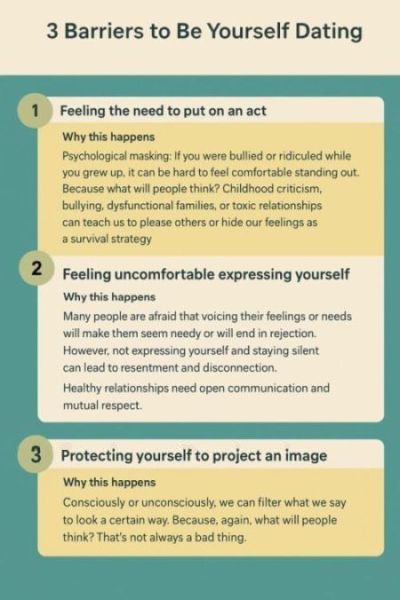
- Feeling the need to put on an act: your ego vs. your essence
Example: When your date makes a joke, you might laugh even if it isn’t funny, hoping they’ll like you — but it sounds fake.
Or maybe you stay silent, which draws attention to your lack of reaction, and some see as socially unacceptable. We all feel the need to “fit in.”
Why this happens: Psychological masking: If you were bullied or ridiculed while you grew up, it can be hard to feel comfortable standing out.
You can end up pleasing others or hide your feelings as a survival strategy. Because what will people think?
But a facade creates cognitive dissonance — a gap between who you are and who you pretend to be — and the effort drains you.
When your date appears to accept your laughter, you feel validated. But the more you succeed at holding the mask, the more your real or authentic self withdraws. Over time, the effort can become exhausting and feel uncomfortable.
It’s natural to want to make a good impression to appeal to your date, but pretending to be someone you’re not can lead to shallow connections and emotional exhaustion. Authenticity builds trust and allows you to develop real feelings and connections. Attraction based on pretending to be someone you are not will fade once real-life sets in.
Practical Tip: Before a date, remind yourself of three qualities you genuinely like about yourself. During the date, focus on showing those qualities rather than what you think they want to see.
Red Flag: If you constantly feel pressure to impress or hide parts of yourself, it may signal insecurity or that the connection isn’t rooted in genuine compatibility.
With another guy years earlier, I agreed to a second date rather than saying I wasn’t interested — even after he asked me if we could hold hands and I said “no.”
As the movie we enjoyed ended, knowing what I had to say, my heart felt heavy.
In the car, he babbled on as the stereo played; the noise muffled his voice. I turned down the volume to give myself space and get his attention.
My words didn’t come out how I expected. “It seems that you’re more interested in me than I am in you.”
He smiled and said, “I know you’re shy, but we could still see each other as friends.”
“I know I’m hurting your feelings, and hate to do that. I don’t have a lot of experience with this.”
“I respect you for telling me.”
Before we departed, his eyes looked like they were welling up with tears, which hurt. But as I walked to my door that night, I felt lighter than I had in days.
- Feeling uncomfortable expressing yourself
Early in “be yourself dating,” expressing yourself authentically can feel tricky. Some people try to present a polished image, carefully choosing every word. Others swing to the opposite extreme and share too much too soon.
On that second date, I learned the importance of asserting myself, but I could have been a little more direct. It felt too vulnerable and painful, so I preferred to cushion the blow.
When you express yourself, you show you care for yourself. It curtails “people-pleasing” behavior. You set boundaries and won’t let others walk all over you.
Many people fear that voicing their feelings or needs will make them seem needy or will end in rejection. However, not expressing yourself and staying silent can lead to resentment and disconnection. Healthy relationships need open communication and mutual respect.
Practical Tip: I recommend starting small and expressing simple preferences as you go to build confidence, communication, and trust.
Red Flag: Your partner continues to dismiss, minimize, or mock your needs. It’s a sign of emotional immaturity and an imbalance in the relationship.
- Protecting yourself to project an image
Consciously or unconsciously, we can filter what we say to look a certain way. Because, again, what will people think? That’s not always a bad thing.
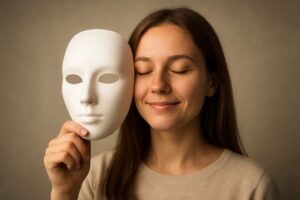
But in dating, you could be appealing to the wrong type; it’s in your best interest to be upfront and show who you are to weed out mismatches. In dropping your mask, you’re testing to see if they’re right for you.
During the second date, I was so worried about appearing “nice” that I couldn’t just say “I’m not interested.” Before I delivered the news, I told him he was a great guy, which was true. But it was also a way to soften my words to protect my “good person” persona.
The irony? When I commented on his talkiness and he said he was nervous and shy, my unsolicited advice to him was to “be yourself” — advice I should have followed, too.
Expert Voices on Protecting Yourself to Project an Image
The act of protecting yourself to create an image prevents you from forming genuine connections because you end up performing instead. The combination of softness and strength requires bravery to reveal your authentic self to others instead of your carefully edited persona.
Practical Tip: Share a genuine personal detail with your date during your next meeting instead of a flaw. You can share a personal experience or reveal your fear or describe your ongoing self-discovery journey.
Your nervous system sends a “truth flag” when you experience more relief than excitement during dates because you probably focus on performing instead of being present.
Protecting yourself to project an image can look like building emotional walls or presenting a polished version of yourself to feel safe, especially after past hurt or rejection. While self-protection can feel empowering, it can also prevent you from having genuine intimacy and it stops others from truly knowing you.
Practical Tip: Practice small moments of vulnerability. Share an honest feeling or story that may help you open up to build trust without losing any sense of safety.
Red Flag: If you notice that no one in your life really knows how you feel or what you need, it may be a sign that self-protection has turned into emotional isolation, which should be addressed properly.
Authenticity can feel scary in the moment, especially for someone who has spent the majority of their life being “easy to love” and shrinking themselves. But silencing yourself and protecting your image comes at the cost of true connection.
Practical Tip: Let one person see something real: your nervous laugh, your odd hobby, or your quirks. Small steps will build self-trust.
Red Flag: If someone is only interested in the “polished” version of you, it’s a sign they’re not looking for a healthy partnership.
One that comes up a lot with my clients is the fear around acceptance. So, they project an image they believe is more likeable than themselves, or adapt like a chameleon to fit with the person in front of them, constantly changing how they portray themselves to avoid rejection. Something deep-rooted is here and work needs to be completed around self-love and acceptance.
Practical Tip: Aim to go into your dates being the most comfortable version of you that you can be and avoid the need to be anything else. You want someone to want to date you again for who you are and not who you pretend to be.
Red Flag: Signs you aren’t doing this:
▪️ Recognizing you are molding yourself to fit
▪️ Telling stories that aren’t true
▪️ Asking questions rather than having a conversation
▪️ Looking for things in common when they aren’t there
True authenticity unfolds over time, and it’s OK to take it slowly.
A healthy form of detachment is being true to yourself while letting go of the need for approval. It breaks the cycle of co-dependence.
📝 Reflection Prompts to Foster Authenticity When Dating
Think back to when you’ve shown confidence when dating — or when you haven’t — whether in conversation or in an online profile. Jot your thoughts.
Prompts:
- When do I most feel like I’m “performing” on a date? What triggers it?
- What do I feel comfortable sharing in person or online?
- Do I say what I think they want to hear, or what I truly think?
- What one small truth about myself do I avoid sharing, and why?
- After a date where I held back, how did I feel afterward: relieved, drained, or neutral?
Challenge yourself. Consider: What do I have to lose in showing up as I am?
Are You Dating in Disguise?
Stop attracting the wrong partners — those who like the act, not the real you. Take charge of your dating life. When you’re not pretending, you’ll feel more present.
Take the dating quiz, get your answers, and find out.
Each of the three themes in this blog are covered in the first three questions.
Frequently Asked Questions About Be Yourself Dating
The advice earlier in this blog can help you notice when you’re hiding yourself and when you feel safe showing up as you are.
If you’re not fully comfortable being yourself, take baby steps like:
▪️ Sharing a genuine opinion with a barista, a clerk, or a co-worker about a non-controversial topic.
▪️ Adding a quirky interest to your dating profile that you’d normally hide, like a love of Godzilla movies.
▪️ Practicing “one-true-thing”: for three dates, share one real preference and journal the outcomes.
It’s fine to reveal small details, like whether you enjoy fly fishing, to attract like-minded people.
If you don’t know someone, it makes sense to be more cautious than you would be with family or friends. With someone you know better, you might share more than you would with an acquaintance — someone you’ve met, but don’t know well.
But when in doubt, leave it out.
If you’re not comfortable, it’s OK to say a little, not a lot. It also adds a sense of mystery.
Obviously, don’t reveal private details like bank account numbers. First dates usually set the stage. Surface details like being a vegetarian or a hunter can be vital in weeding out mismatches, as can more in-depth data like whether you work or have kids.
It’s normal to fear rejection. When you share your quirks, interests, or experiences, you can be concerned you’re “too much” for someone to handle. But confidence when dating comes from knowing the right person will stay.
You don’t always know if someone is who they say they are.
Share only what you feel comfortable disclosing. If you post old, doctored, or fake photos, people who meet you in person will notice — you then have to deal with whether it makes a difference to them. If you lie about your age, the truth might also eventually come out.
One of the best ways to set yourself apart is to be yourself.
Parting Thoughts About Authenticity in Dating
“Be yourself dating” — being authentic without pretending or overthinking — gives you freedom to accept yourself and the outcome as they are. It’s a more honest way of showing up.
Authenticity is an act of self-trust. Each time you show your true self, you control your destiny rather than letting others’ approval determine your self-worth.
Reframe any rejection you face while you’re being authentic: it’s not a judgment of your value, but data to help you determine compatibility. See it as the ultimate time-saver.
👉 Up next: connecting with your true self while dating, a core part of authenticity.
Are you dating in disguise? Take this free dating quiz and find out if you’re showing up as you are today.

She invites singles dating after 30 to join her on the journey to love, one that fosters self-acceptance and an awakening to the joys of life. Discover how dating with intent through expert advice and stories grounded in experience can help you find a match.
For more guidance on authenticity in relationships, watch Michelle’s latest YouTube videos
@MyJourneytoLove-y4e.
- Relationship Doubts: Is This Relationship Right for Me? A Fixed vs. Fluid View - March 25, 2026
- Truecasting 101: Stop Losing Yourself and Begin Building Authentic Relationships - February 18, 2026
- How Dating App Fatigue Kills Authenticity in Relationships — and How Clear-Coding Fixes It - January 23, 2026
